SCIENCE / VOLUME 03FORMULATION · DELIVERY · CLINICAL
The physics of
a 15 µm layer.
The stratum corneum is roughly the thickness of a red blood cell — a 15-micron mosaic of dead corneocytes stacked in a lipid matrix. It is the reason topical medicine is difficult. Everything Xhealth develops is a negotiation with this layer: how to cross it, how to stay in it, how to leave it undamaged.
§ 01 — PLATFORMS
Six vehicles
for one problem.
Fast-breaking foams
Low-density hydro-alcoholic vehicles that spread thinly across scalp, collapse in under a minute, and leave a uniform residue without occlusion or greasiness.
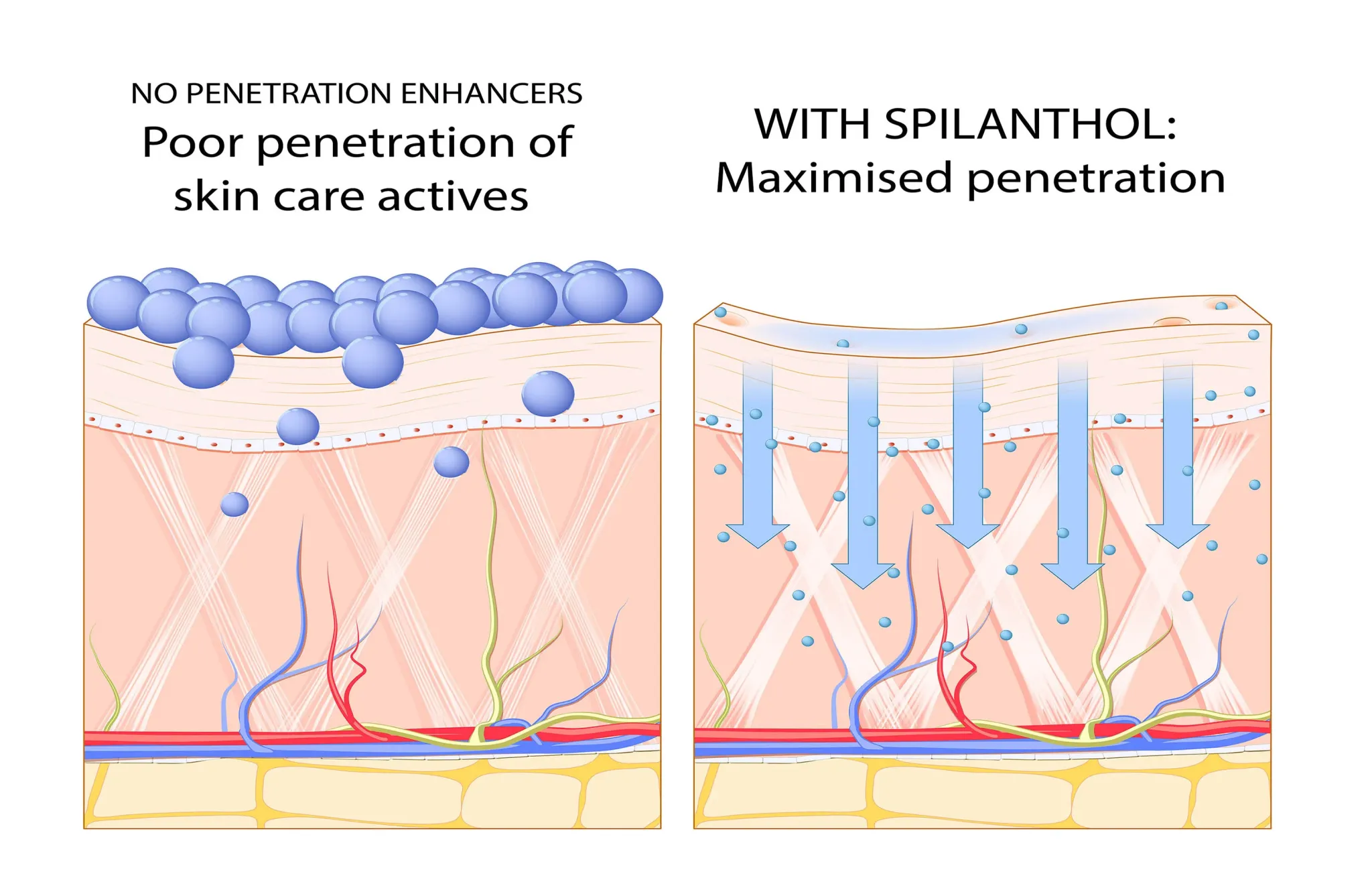
Engineered for the infundibular region of the hair follicle, this transient low-density hydro-alcoholic bubble matrix collapses spontaneously within 45 seconds upon contact with skin at 37°C. The collapse drives the active ingredient into a supersaturated micro-film, powerfully enhancing transmembrane flux without relying on irritant chemical penetration enhancers such as propylene glycol — and without any greasy residue.
Polymer film gels
Single-application gels that cure into a transparent film, releasing an active in near-zero-order kinetics over a full week. One dose, seven days of work.
A single application undergoes rapid phase inversion driven by volatile solvent evaporation, curing into an invisible, water-resistant, semi-permeable polymer film. This film network functions as a constant-rate reservoir, maintaining a steady chemical potential gradient and delivering the active pharmaceutical ingredient via near-zero-order kinetics continuously for seven days.
Eutectic sprays
Two-active spray systems using melting-point depression to reach mucosal nerve endings within minutes — precise dosing without excessive numbness or alcohol sting.
By precisely engineering the binary phase diagram of two crystalline actives, their eutectic melting temperature is depressed below the surface temperature of the skin. The resulting liquid eutectic system possesses extremely high thermodynamic activity (a=1), enabling efficient penetration through the mucosal layer to reach nerve endings within minutes — entirely without the stinging sensation associated with high-concentration alcohol.
VH · 004 · CREAM-D
ACTIVE
Depigmenting creams
Hydrolytically-stable emulsions carrying tyrosinase inhibitors, retinoids and corticosteroids — the pigment ladder from monotherapy to FHT triple combination.
Purpose-built to conquer the incompatibility and hydrolytic instability of multi-component actives — retinoids, hydroquinone, and corticosteroids — within a single formulation. At the microscopic level, a spatially compartmentalized multi-phasic liquid-crystalline lipid network closely mimics the intercellular lipid matrix, simultaneously preventing water loss and oxidative degradation while enabling sequential, layer-by-layer release along the pigment ladder.
VH · 005 · LACQUER
ACTIVE
Medicated lacquers
Water-resistant film-forming lacquers that adhere to the nail plate for a full week, releasing amorolfine into the nail bed while resisting daily washing.
An amphiphilic polymer matrix formulation that bonds tightly to the highly hydrophilic keratin of the nail plate. Upon solvent evaporation, a highly occlusive local microenvironment is established, promoting full hydration of the nail plate and dramatically increasing the porous diffusion coefficient — driving active drug transport across the nail plate deep into the nail bed.
Heparinoid gels
MPS-anchored polysaccharide gels. Densely-sulphated backbones hydrogen-bond water into the outer dermis and stimulate endogenous hyaluronate synthesis.
Built on a semi-synthetic glycosaminoglycan — mucopolysaccharide polysulfate (MPS). Leveraging the strong negative charge carried by its densely sulphated backbone, it anchors water molecules within the extracellular matrix via hydrogen bonding, while simultaneously triggering comprehensive endogenous hyaluronic acid synthesis in the deeper epidermis.
§ 02 — POLYSACCHARIDES
The molecule that taught skin
how to hold water.
Mucopolysaccharide polysulfate is a semi-synthetic glycosaminoglycan built from polysulfated chondroitin. It has been used clinically for over five decades — for bruises, superficial thrombophlebitis, xerosis, atopic dermatitis and post-inflammatory dryness — and it is the pharmacological backbone of Hirudiox®.
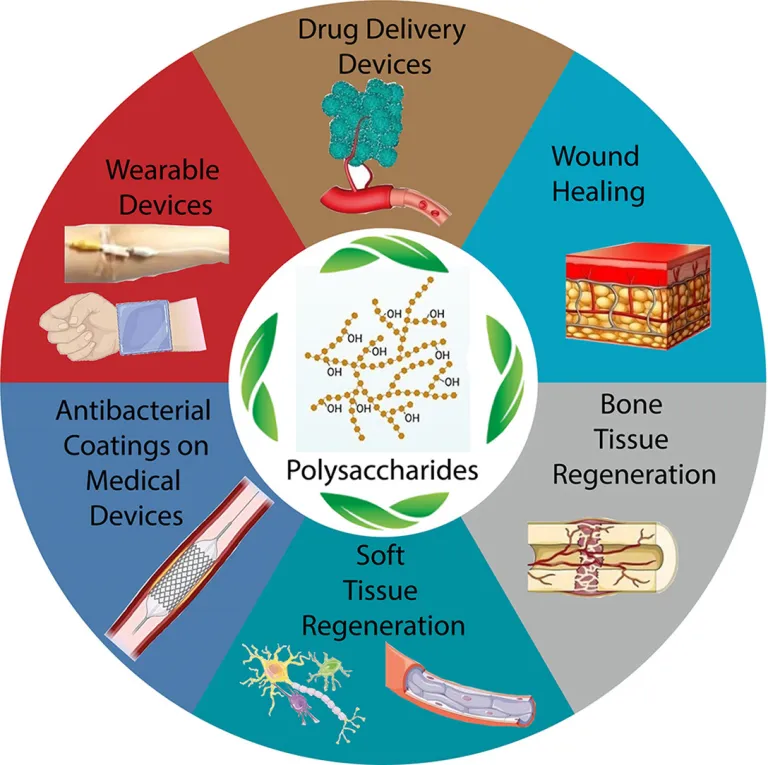
CORE MECHANISMS & BIOLOGICAL ACTIVITY
Four pathways, one molecule.
Mucopolysaccharide polysulfate is not a single-action molecule. Its densely-sulphated glycosaminoglycan backbone interacts with multiple dermal systems at once — coagulation, inflammation, hydration and vascular function.
01 · ANTITHROMBOTIC & FIBRINOLYTIC
Exhibits heparin-like activity, interacting with blood coagulation factors and releasing Tissue Factor Pathway Inhibitor (TFPI) to prevent and dissolve superficial blood clots.
02 · ANTI-INFLAMMATORY
Helps rapidly resolve subcutaneous hematomas, infiltrates, and acute inflammation in superficial vascular dermal tissues.
03 · DERMAL HYDRATION
Stimulates endogenous hyaluronate synthesis, increasing the water-binding capacity, structural density, and elasticity of the extracellular matrix.
04 · VASCULAR ACTION
Promotes microvascular blood flow and strengthens the epidermal barrier by modulating tight junction proteins inside dermal papillary loops.
STUDY 002 · CUTANEOUS BLOOD FLOW
Why the dermis notices
Cutaneous blood flow (CBF) is regulated through dermal papillary loops — arterial capillaries that supply nutrients and clear metabolites. When CBF is impaired, so is thermoregulation, wound healing, and the skin's response to injury.
Laser-Doppler studies show that topically-applied MPS increases local skin blood volume and basal sweating — evidence that a molecule >500 Da can, in fact, reach the dermis and act on its cells. Clinical data demonstrate that, despite MPS exceeding 500 Da in molecular weight, topical administration via a specialised vehicle enables efficient penetration through compromised or xerotic barrier-deficient regions, increasing basal capillary blood flow in the local dermis by 1.9× and accelerating haematoma resolution and deep scar remodelling.
This is why MPS-containing topicals are clinically effective for conditions rooted in vessel-function failure: bruising, superficial thrombophlebitis, asteatosis, chronic venous discomfort, and the ageing skin's slow retreat from its own microcirculation.
50+ yr
Cumulative clinical use
+38%
Hydration Δ vs. baseline · 4 wk
1.9×
Local cutaneous blood volume
>500 Da
Molecular weight, dermal-reaching
§ 03 — FOAMS
Why foam wins
on the scalp.
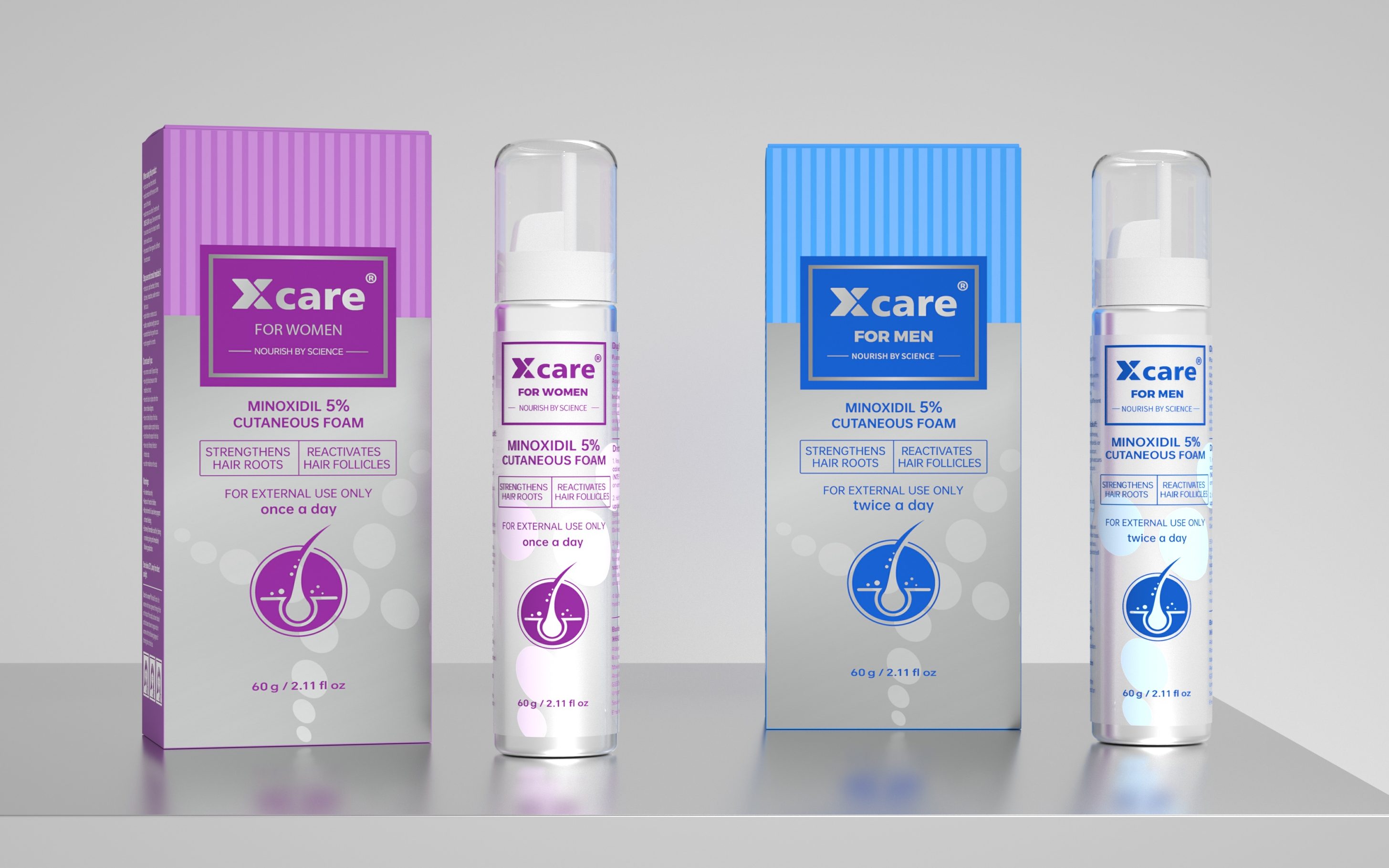
A solution poured onto scalp will run off. A cream will smear the hair and refuse to reach the follicle. A fast-breaking foam — a low-viscosity liquid that expands into a bubble matrix on contact with warmth, then collapses in 30–60 seconds — solves both problems at once.
Foam permeation depends on three physical parameters: surface tension, evaporation kinetics, and the diffusion coefficient of the active in the residue phase. In our proprietary Xcare vehicle, these three are tuned so that minoxidil precipitates as a supersaturated film on the scalp. Upon contact with scalp warmth, the bubble matrix collapses precisely within 30–60 seconds, driving minoxidil to precipitate across the stratum corneum with exceptionally high thermodynamic driving force — a driving force that pushes molecules through the corneum without the propylene glycol that irritates so many patients. This not only eliminates the risk of contact dermatitis but also substantially improves daily patient adherence.
The clinical consequence is unglamorous but important: patients actually apply it. In the pharmacology of hair loss, adherence is half the battle, and vehicle design is where that battle is won.
§ 04 — LITERATURE
What the journals say.
NAT REV DIS PRIMERS
Androgenetic alopecia — a comprehensive review
York K, et al. · Vol. 11, 2025 · Genetics, DHT signalling, therapeutic landscape and evolving guidelines.
Exhaustively analyses the physical-kinetic relationship between follicular androgen receptor (DHT) signalling pathways and topical vehicle optimisation, validating the clinical advantage of propylene-glycol-free thermosensitive foam systems in avoiding dermal irritation.
2025 →
J AM ACAD DERMATOL
Consensus on melasma diagnosis & treatment
Reframing melasma as a chronic dermatosis; hydroquinone monotherapy, triple combination therapy, and long-term maintenance protocols.
Formally defines melasma as a chronic systemic dermatosis, reinforcing the gold-standard status of multi-component triple combination therapy (FHT) in clinical management, and highlighting the critical role of multi-phasic layered emulsification in preserving the activity of oxidation-prone hydroquinone molecules.
2025 →
BR J DERMATOL
Topical finasteride vs. oral — a systematic review
Comparable efficacy in scalp DHT reduction with markedly lower serum exposure — the pharmacological case for XGaine.
Demonstrates that film-forming polymer technology maintains high local follicular drug concentrations while blocking up to 90% of systemic serum drug exposure, striking the balance between therapeutic efficacy and systemic side-effect profiles.
2024 →
SKIN PHARM PHYSIOL
Mucopolysaccharide polysulfate — five decades of clinical evidence
Meta-review of MPS in bruising, phlebitis, xerosis and eczematous conditions.
A systematic retrospective spanning fifty years of global clinical research on mucopolysaccharide polysulfate (MPS), demonstrating extensive efficacy in haematoma resolution, barrier hydration restoration, and preventive intervention in atopic dermatitis.
2023 →
J DRUGS DERMATOL
Single-application terbinafine — pharmacokinetics of a film-forming vehicle
Sustained fungicidal concentrations for 13 days after a single dose — the foundation of Dr Giles ONCE.
Validates that a single-dose film-forming vehicle can sustain fungicidal concentrations for up to 13 days, providing the critical pharmacokinetic foundation for the zero-order controlled-release system of Dr Giles ONCE.
2022 →
DERMATOL THER
Onion extract + heparin + allantoin gel — scar remodelling evidence
RCT-level data on hypertrophic scar prevention and keloid softening across surgical and post-burn populations.
Systematic evidence from randomised controlled trials (RCTs) confirming the significant efficacy of MPS-containing composite gels in hypertrophic scar prevention and keloid softening across post-surgical and post-burn patient populations.
2023 →